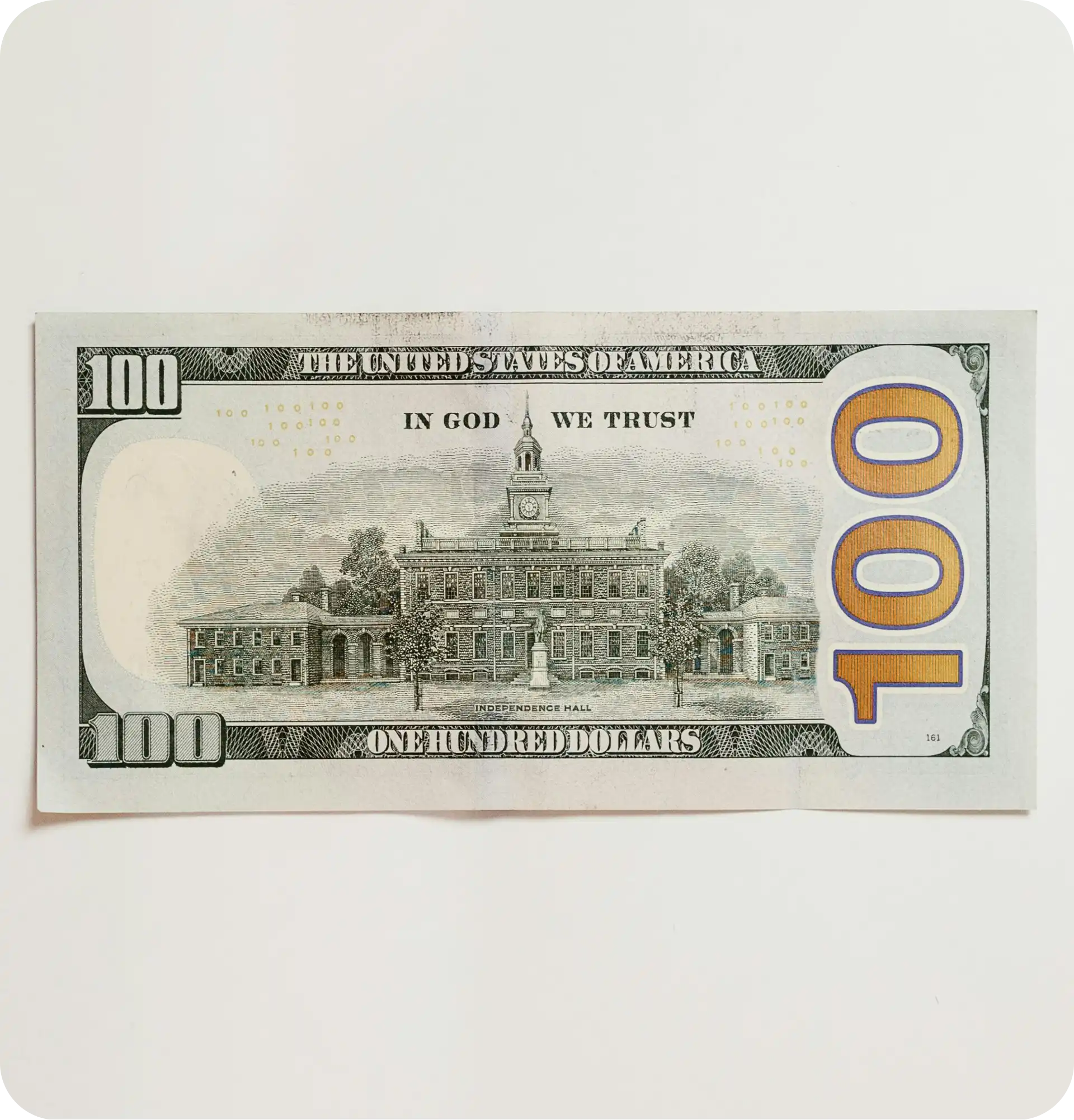
How much $100 was worth 10 years ago vs today isn’t just a for fun question — it’s a reality check.
Thanks to inflation, that same $100 note in your wallet doesn’t buy anywhere near what it used to in 2015. In the U.S., prices have climbed sharply over the past decade, especially after 2021. Official inflation data shows that you’d now need roughly $135–$140 to buy what $100 bought in 2015.
Why it matters:
- Your savings are quietly losing power.
- Your salary might not be keeping up.
- Everyday decisions (rent vs buy, cash vs investing, debt vs saving) look very different once you understand this gap.
This article breaks down how much $100 from 2015 is worth in 2025, what happened in between, and what it means for your money going forward.
1. How much did $100 actually lose?
Let’s ground this in numbers, using U.S. data.
The hard math
Based on official U.S. Consumer Price Index (CPI) data and multiple inflation calculators:
- $100 in 2015 ≈ $136–$138 in 2025 in terms of buying power.
- That means prices are roughly 36–38% higher than they were 10 years ago.
Flip it around:
$100 today buys about what $72–$73 would have bought in 2015.
So if you’re holding the same $100 in cash you had 10 years ago and never invested it, it’s like someone quietly shaved off almost 30% of its real power.
Why did this happen?
Inflation is normal over long periods, but the last decade wasn’t “normal.”
- Before 2020, inflation was relatively low and stable.
- From 2021–2022, inflation jumped hard due to:
- Supply chain shocks
- Pandemic recovery
- Massive stimulus
- Energy price spikes
U.S. CPI data shows annual inflation spiking above 7–8% at one point, the highest in decades, before cooling back toward the 3% range in 2024–2025. bls.gov+1
Those two or three hot years did most of the damage to your $100.
CPI: the engine behind these numbers
All of this comes from the Consumer Price Index (CPI) — a measure of how prices change for a “basket” of goods and services (food, rent, transport, healthcare, etc.).
- CPI in 2015 was around 237 (index level).
- CPI in 2025 is estimated around 322+.
That jump in the index is basically the story of why your $100 doesn’t stretch.
2. Impact : What does this change in $100 actually mean?
It’s one thing to say “inflation is 36% in 10 years.” It’s another to feel it.
Everyday life
Here’s what that loss of value looks like in real life:
- The grocery trip that cost $100 in 2015 might now be closer to $135–$140.
- A casual dinner for two that used to be $40–$50 might now push $60–$70.
- Streaming, subscriptions, utilities, and transport all creep up a little each year — and it compounds.
You don’t notice it overnight. You notice it when suddenly “I used to survive on this salary; now I can’t.”
Salaries vs inflation
The critical question: Did your income grow faster than prices?
- If your salary rose more than ~36–38% in 10 years, you gained ground in real terms.
- If it rose less, you’re technically poorer in purchasing power, even if your payslip looks bigger.
Many workers see 2–3% raises per year on paper, which sounds fine—until you compare it to inflation spikes above that level.
Savings sitting in cash
If you left $5,000 sitting in a bank account earning near-zero interest during most of the last decade:
- In nominal terms: still $5,000.
- In real terms: it spends like ~$3,600 from 2015.
That’s the invisible tax of inflation:
you didn’t lose dollars, you lost what those dollars can do.
🏠 Debt, mortgages & a weird “win”
Here’s the twist: inflation doesn’t hurt everyone equally.
If you locked in a fixed-rate mortgage or loan years ago, inflation actually helped you:
- Your monthly payment stayed the same in dollars…
- …but those dollars became cheaper in real terms over time.
- Meanwhile, wages and rents moved up.
So inflation punished:
- Cash hoarders
- People on fixed incomes with no adjustment
And helped:
- Borrowers with long-term fixed-rate debt
- Asset owners (houses, stocks) that rose with or above inflation
3. Our Take
1- Cash is not “safe” — it’s quietly melting
People often think:
“I’ll just keep money in the bank. It’s safe.”
Safe from volatility? Yes.
Safe from inflation? Absolutely not.
The last 10 years show that doing nothing with your money is also a decision — and usually a bad one over long periods.
2- The real metric: “What can my money buy?”
The smart way to look at your finances now is:
- Not just “How many dollars do I have?”
- But: “What can these dollars buy compared to 5–10 years ago?”
That mindset shift changes how you:
- Judge your salary progress
- Think about saving vs investing
- Evaluate rent, mortgages, or long-term commitments
3- Inflation probably won’t vanish — just change shape
Most forecasts and central bank targets still sit around 2–3% inflation per year long-term.
That sounds small, but over 10 years, even 2.5% annual inflation:
- Eats away ~28% of purchasing power.
Inflation is a slow, boring problem…
until you zoom out 10 years and realize your $100 became $72 in real terms.
4- Practical implications for normal people
Without giving personal financial advice, here’s the high-level takeaway:
- Being 100% in cash long-term is risky.
- Assets that can grow faster than inflation (well-diversified investments, real estate, skills that increase your earning power) are your protection.
- Neglecting inflation is basically agreeing to a slow, quiet pay cut every year.
The gap between “people who understand this” and “people who don’t” is one of the big reasons wealth gaps keep widening.
4. Final thought
“How much $100 was worth 10 years ago vs today” is more than a curiosity — it’s a warning.
If $100 from 2015 now spends like roughly $72, it means the game isn’t just about earning money. It’s about protecting its buying power.
Inflation is not dramatic like a market crash. It’s slow, boring, and easy to ignore — which is exactly why it’s so dangerous if you never plan around it.
Stay ahead
For more updates, insights, and breakdowns on everything happening in money, inflation, and personal finance, keep following TopicTric — we cover every major shift the moment it happens so you never fall behind.
About the Author