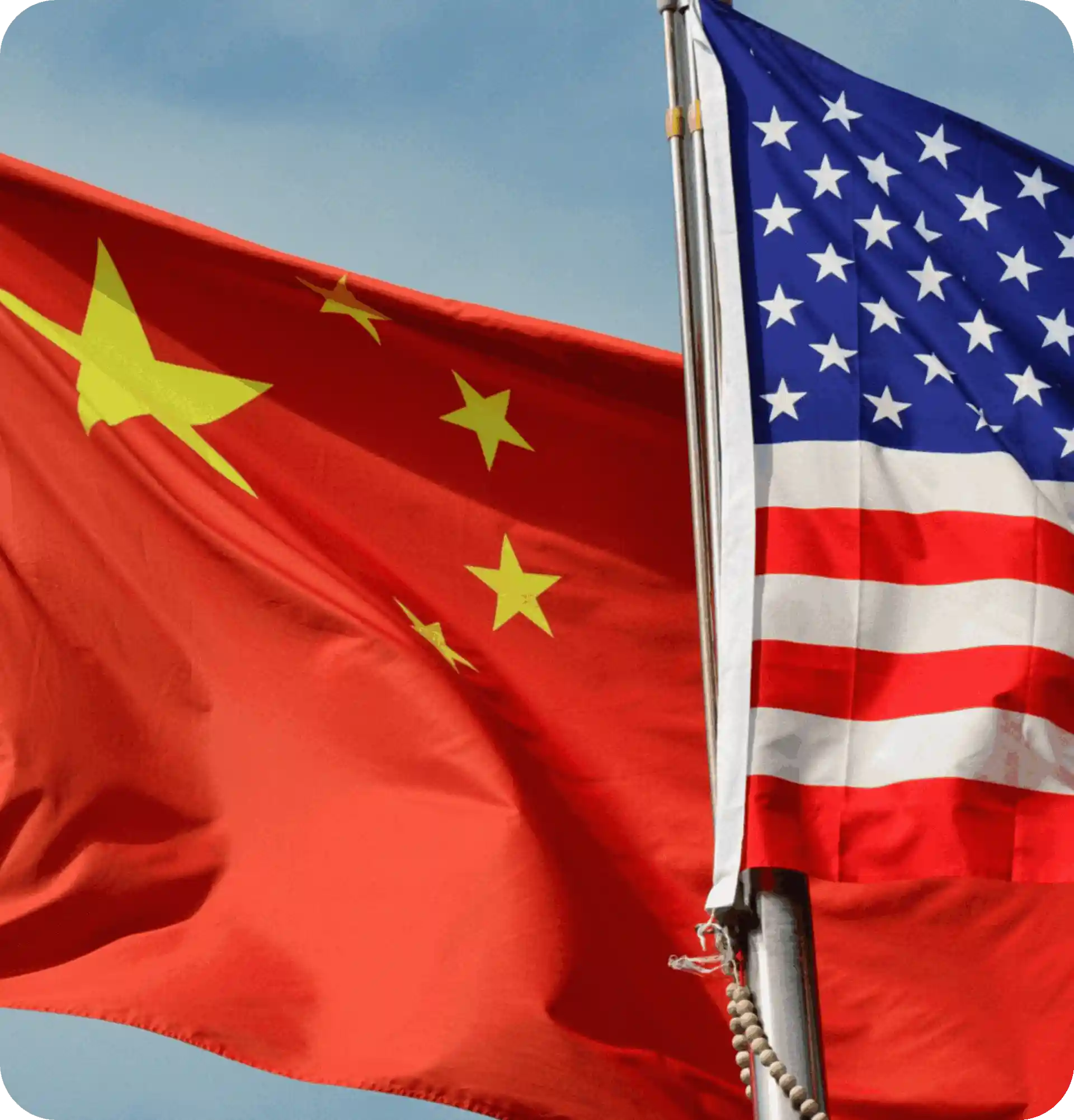
Geopolitical tensions between China and the United States have been influencing the global tech sector for years, but after the recent memory-chip crisis, the impact is clearer than ever. Although the supply shock around DRAM and NAND has begun to stabilize, the broader uncertainty surrounding the China–US relationship continues to reshape innovation, pricing, supply chains, and long-term technological strategy. The stabilization of memory prices didn’t signal the end of disruption—it simply revealed how fragile the industry has become.
Today, the question isn’t whether these geopolitical tensions matter. It’s how deeply and how permanently they are transforming the entire tech landscape.
What Is This?
A comprehensive, in-depth analysis of how ongoing China–US tensions—from export restrictions to semiconductor competition—are still affecting the global technology ecosystem even after the memory crisis appears to have cooled. This article explores shifts in supply chains, hardware pricing, infrastructure investment, and the rising role of AI accelerators and memory technology.
What’s New
While the most dramatic price spikes in DRAM and NAND memory have eased, the underlying structural issues persist:
- The semiconductor industry is still heavily dependent on East Asian manufacturing
- The U.S. continues to strengthen restrictions on advanced chip exports to China
- China is accelerating domestic chip development at an unprecedented rate
- AI demand is pushing memory and compute requirements to historic highs
- Memory manufacturers are restructuring production to prioritize HBM and AI-focused components
These forces continue to shape the global market long after the initial memory shock faded.
How It Works: Why the Tension Still Matters After the Memory Crisis
The impact is not direct—it’s systemic. Even if memory supply stabilizes, geopolitical stress amplifies vulnerabilities across every part of the tech pipeline.
1. Export Controls Have Redefined “Advanced Technology”
The U.S. has restricted China’s access to:
- High-end GPUs
- Advanced lithography equipment
- High-bandwidth memory (HBM)
- Certain data-center components
- Cutting-edge semiconductor manufacturing tools
HBM is especially critical due to explosive AI growth—and restrictions on it influence pricing across the global memory market.
Even after the DRAM/NAND spike cooled, the new bottleneck is clearly HBM supply.
2. China Is Accelerating Domestic Alternatives
China responded by boosting investment in:
- SMIC fabrication nodes
- GPU alternatives such as Huawei Ascend
- Local DRAM and NAND production
- Chip-packaging infrastructure
- AI accelerators optimized for domestic markets
This rapid buildout increases the risk of global fragmentation: separate tech ecosystems evolving in parallel.
3. Supply Chains Are Under Constant Reconfiguration
Major companies—including Apple, NVIDIA, Tesla, and Samsung—are actively shifting production away from China toward:
- Vietnam
- India
- Mexico
- Thailand
- Malaysia
But relocation isn’t smooth:
- New factories require massive investment
- Local expertise needs years to develop
- Supplier ecosystems can’t be rebuilt overnight
The result? Higher production costs and more fragile supply chains, even after memory capacity increased.
4. AI Is Creating a New Pressure Layer
AI systems require enormous memory bandwidth, compute, and specialized hardware.
This introduces new dependencies:
- HBM3 and HBM3E production
- High-performance GPUs
- Advanced packaging
- Cutting-edge lithography
Any geopolitical disruption affects these components instantly.
The memory crisis wasn’t an isolated event—it was a preview.
5. Consumers Now Feel the Effects More Directly
Even average users notice:
- Higher laptop and smartphone prices
- Slower availability of certain components
- Rising cost of RAM and SSD upgrades
- Fewer “affordable flagship” devices
This is not inflation—it’s the cost of geopolitical fragmentation.
Background
For decades, the semiconductor industry relied on a relatively stable arrangement:
- The U.S. designs chips
- Taiwan fabricates them
- South Korea manufactures memory
- China assembles and exports devices
This model kept prices low and innovation fast.
But with geopolitical tension rising:
- Taiwan’s manufacturing dominance is seen as a risk
- The U.S. wants chip sovereignty
- China wants self-sufficiency
- Korea and Japan are caught between alliances and supply dependencies
The old model is collapsing—and nothing fully replaces it yet.
Comparison: Tech Industry Before vs After the Memory Crisis
| Category | Before Memory Crisis | After Memory Crisis |
|---|---|---|
| Memory pricing | Stable and predictable | Volatile, influenced by AI demand |
| China–US relations | Competitive but manageable | Restrictive, policy-driven |
| Supply chain | Centralized in East Asia | Diversifying but unstable |
| AI hardware | Niche | Dominant driver of global semiconductor demand |
| GPU availability | Strong | Severely limited for Chinese companies |
| Consumer pricing | Inflation-driven | Geopolitically-driven increases |
The memory crisis didn’t cause these changes—it exposed them.
Pros & Cons of Tension-Driven Restructuring
Pros
- Incentivizes global diversification of chip manufacturing
- Encourages technological competition
- Promotes regional innovation hubs
- Reduces overreliance on East Asian production
Cons
- Higher device prices for consumers
- Slower production cycles
- Fragmented AI hardware ecosystems
- Increased risk of supply chain failure
- Innovation becomes political instead of scientific
The tech world thrives on stability—and current conditions erode that stability.
What We Still Want to See
To strengthen resilience, the industry still needs:
- A distributed semiconductor manufacturing network—not concentrated in one region
- Cooperative frameworks to protect global supply chains
- Long-term memory production capacity scaled for AI demands
- More transparency around export restrictions and industry impact
- AI hardware standards that work globally, not regionally
The future hinges on whether governments and corporations treat semiconductors as global infrastructure rather than geopolitical leverage.
Our Take: Why This Still Matters in 2025
The China–US conflict did not merely influence the tech sector—it redefined it.
The memory crisis was not an anomaly but a signal of structural fragility.
Here’s the truth:
The tech industry is now shaped as much by foreign policy as by innovation.
Semiconductors, memory, AI accelerators, and advanced GPUs have become strategic assets. Nations are not just competing—they’re building barriers, accelerating self-sufficiency, and establishing technological borders.
Even as memory prices stabilize, the underlying tension ensures:
- Continued volatility
- Higher manufacturing costs
- Fragmented product ecosystems
- More risk for global tech companies
- A widening gap between open and restricted technology zones
In other words:
Yes, the tensions deeply affect the tech sector—and the impact is only growing.
Conclusion
China–US tensions continue to influence the global tech ecosystem long after the memory crisis settled. The conflict now shapes everything: supply chains, pricing, AI hardware availability, manufacturing priorities, and the pace of innovation. Until the semiconductor industry becomes geographically diversified and politically insulated, every flare-up—no matter how small—will ripple across the market.
The memory crisis may be over, but the era of geopolitical instability in technology is just beginning.
Stay Ahead
For more updates, insights, and breakdowns across tech, entertainment, and new trends, keep following TopicTric — we cover every major shift the moment it happens so you never fall behind.
About the Author