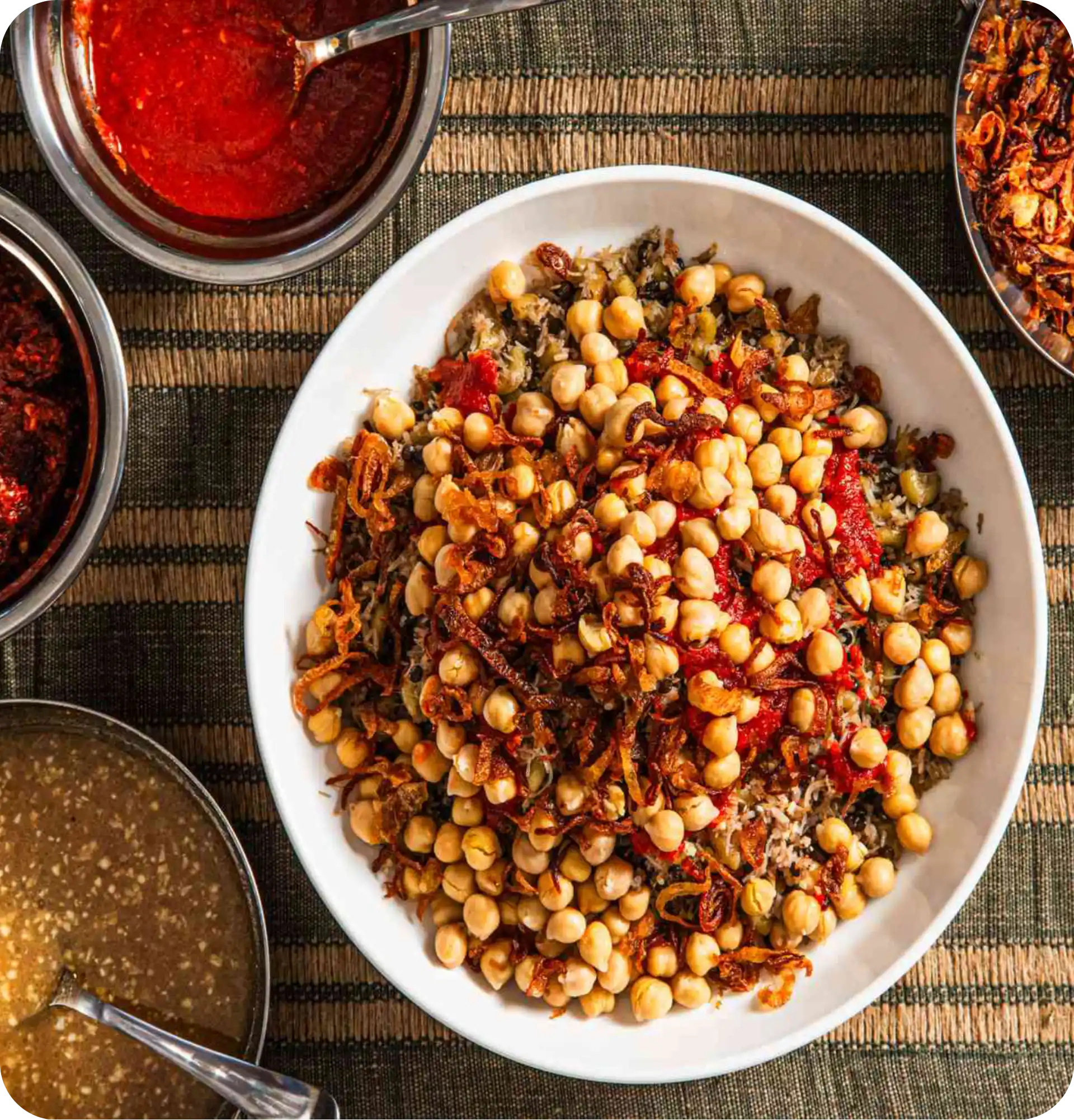
Egyptian koshary is more than a humble meal — it’s a culinary emblem that emerged from necessity and evolved into Egypt’s beloved national dish. With its layers of rice, lentils, pasta, chickpeas, and crunchy onions, topped with a tangy tomato and garlic-vinegar sauce, koshary captures the soul of everyday life in Egypt. It matters because it unites history, culture, economics, and taste in a single bowl — offering a satisfying, affordable meal that reflects Egypt’s past and resonates worldwide.
Key Features of Egyptian Koshary
Koshary — sometimes spelled kushari or koshary — is a mixture of seemingly ordinary staples brought together in a way that becomes extraordinary. Its signature appeal lies in several key features:
- A hearty, layered texture and flavor profile: The bottom layer typically combines rice and brown lentils (or rice and vermicelli/lentils), followed by macaroni or short pasta, chickpeas, and sometimes vermicelli. This base is enriched by a garlicky, zesty tomato sauce and optionally spiced with chili or hot sauce. Finally, it’s crowned with crispy fried onions.
- Vegan, affordable, and filling: Koshary contains no meat, making it inherently plant-based. Its ingredients are inexpensive staples — rice, legumes, pasta — which made it a go-to meal for laborers, students, and large families. Prices in Egypt often remain very low, earning its reputation as “poor man’s food.”
- Versatile and accessible: Koshary can be found everywhere — from street carts and roadside stalls to dedicated koshary restaurants, and even in homes. It’s eaten as lunch, dinner, or even a hearty snack.
- A blend of culinary influences and history: Its evolution reflects Egypt’s historical openness to global influences: lentils and rice reminiscent of older Egyptian and Middle Eastern staples; pasta from Italian influence; and rice-lentil dishes akin to Indian khichri through the colonial period.
- Customizable and social eating — diners often request extra tomato sauce, garlic-vinegar (da’a), hot sauce, or fried onions. Koshary is frequently served in generous portions and of course, leftovers are a badge of a satisfying meal.
Koshary is chaotic — but in the best way: multiple staples, multiple flavors, multiple textures — but balanced in one bowl.
How to Make Traditional Egyptian Koshary (Home Recipe)
If you want to experience koshary beyond the street stalls and restaurants, preparing it at home is surprisingly rewarding. It requires multiple components, but each is simple on its own — the magic happens when they come together.
Ingredients (Serves 4–6)
| Component | Ingredients |
|---|---|
| Base | 1 cup brown lentils (washed), 1 cup medium-grain rice, 1 cup elbow or small macaroni, 1 cup vermicelli (optional), 1 cup boiled chickpeas |
| Tomato Sauce | 4 large tomatoes (blended), 3 tbsp tomato paste, 4 minced garlic cloves, 2 tbsp vinegar, 1 tsp cumin, 1 tsp coriander, salt + pepper |
| Garlic-Vinegar Da’a | 5 minced garlic cloves, 3–4 tbsp white vinegar, ½ tsp cumin, pinch of salt |
| Crispy Fried Onion Topping | 2–3 large onions (thinly sliced), 1 cup oil for frying |
| Extras (optional) | Chili oil, hot sauce, more fried onions, extra vinegar |
How to Make It
Step-by-Step**
1- Prepare the Lentils
- Boil lentils in salted water until softened (15–20 minutes).
- Drain and set aside.
2- Cook the Rice
- Lightly toast vermicelli in oil until golden (optional).
- Add rinsed rice + lentils together and cook with water and salt.
3- Cook the Pasta
- Boil macaroni separately, salt the water, drain, set aside.
4- Make the Tomato Sauce
- Sauté garlic in a little oil.
- Add tomato paste + blended tomatoes.
- Season with cumin, coriander, salt, pepper.
- Add vinegar and simmer until thick and flavorful.
5- Prepare the Da’a (Garlic Vinegar Shot)
- Mix minced garlic, vinegar, pinch of cumin, and salt.
- Add 2–3 spoonfuls of the tomato sauce to balance flavor.
6- Fry the Onions
- Thin slices → fry in hot oil until crispy.
- Keep the oil — it becomes flavored oil for serving.
7- Assemble the Koshary (The Signature Layers!)
- Base: Lentil-rice mix
- Pasta
- Chickpeas
- Tomato sauce
- Drizzle da’a
- Add lots of crispy onions on top
- Optional: Hot sauce for heat
Serving
Koshary is best served hot, with extra sauce, garlic vinegar, and fried onions offered on the side — because no two plates of koshary are the same.
Context
The story of koshary is as much social and economic as it is culinary.
In a rapidly changing Egypt, koshary offered — and still offers — a dependable, filling meal that doesn’t break the bank. It historically catered to working-class Egyptians, laborers, students — those who needed nourishment over luxury.
Over time, it transcended class. What began as cheap street fare is now widely accepted across society. Koshary shops appear in urban centers, and restaurants specialize exclusively in this dish.
More recently, koshary has also found an audience beyond Egypt. As global interest in vegan or plant-based diets grows, koshary’s roots-only ingredients make it appealing to health- and environment-conscious diners.
Additionally, as Middle Eastern cuisine becomes more popular internationally, koshary stands out for its texture, flavor, affordability, and story — making it a culinary ambassador for Egypt worldwide.
Pros:
- Affordable and accessible — starches and legumes are widely available and inexpensive.
- Vegan and naturally plant-based — no need for meat or animal products.
- Hearty and filling — a small plate can sustain a worker or student.
- Flexible — you can adjust sauce levels, spice, portions, and even add extras (e.g., more onions, extra sauce, chickpeas).
- Cultural and social — eating koshary is part of everyday Egyptian life; it strengthens social bonds and nostalgia.
Challenges:
- Carb-heavy — not ideal for those on low-carb or strict diets.
- Requires multiple cooking steps — preparation at home can be time-consuming (different pots for rice & lentils, pasta, frying onions, sauces).
- Inconsistency — street vendors may vary quality, sauce balance, and hygiene; some may overuse oil or sauce.
- Perception — some outside Egypt may find the mix unusual or suspect it’s overly heavy.
In context, koshary serves as both a comfort food and a socio-economic equalizer. It showcases how accessible food can be nourishing, communal, and full of flavor — qualities often lost in fast-food or high-end dining.
Our Take
Koshary is more than just a plate of carbs and sauce — it’s a statement about culture, resilience, and identity.
Insights:
- In a world increasingly dominated by fast food and convenience meals, koshary represents the power of simplicity. It shows that comfort and satisfaction don’t require luxury or meat.
- Its vegan nature and reliance on legumes and grains resonate with global shifts toward plant-based diets and sustainable eating.
- As Egyptians migrate and diaspora communities spread globally, koshary becomes a taste of home — helping preserve cultural identity and introducing Egyptian cuisine to new audiences.
Predictions:
- Koshary may become the next “global comfort food,” much like pizza or ramen, embraced in restaurants or pop-ups worldwide.
- We may see more modern adaptations — fusion versions with local twists or upscale presentations — but the core identity (rice, lentils, pasta, sauce, onions) will remain because it works.
- As sustainability and vegan diets grow in popularity, dishes like koshary — filling, affordable, plant-based — will gain more global traction and recognition.
Interpretation:
Koshary’s journey — from cheap street fare to global interest — mirrors Egypt’s own story of transformation. It represents how resourcefulness, adaptation, and cultural layering produce something unique, nourishing, and enduring.
Impact:
When a dish becomes an icon, it shapes perception. Koshary doesn’t just feed stomachs — it feeds memories. It gives Egyptians a unifying culinary identity, and gives visitors a tangible taste of Egypt’s resilience, creativity, and hospitality.
Final Thought
Koshary embodies a delicious paradox: humble ingredients, grand impact. It’s messy, carb-heavy, vegan, comforting, and social all at once. It’s as Egyptian as the Nile — rooted in history, nourished by necessity, and shared across generations. Whether you savor it on a busy Cairo street or recreate it at home, koshary is more than a dish. It’s a story — simple in its elements, profound in its meaning.
Stay Ahead
For more updates, insights, and breakdowns on everything happening in Egyptian cuisine and street food culture, keep following TopicTric — we cover every major shift the moment it happens so you never fall behind.
About the Author