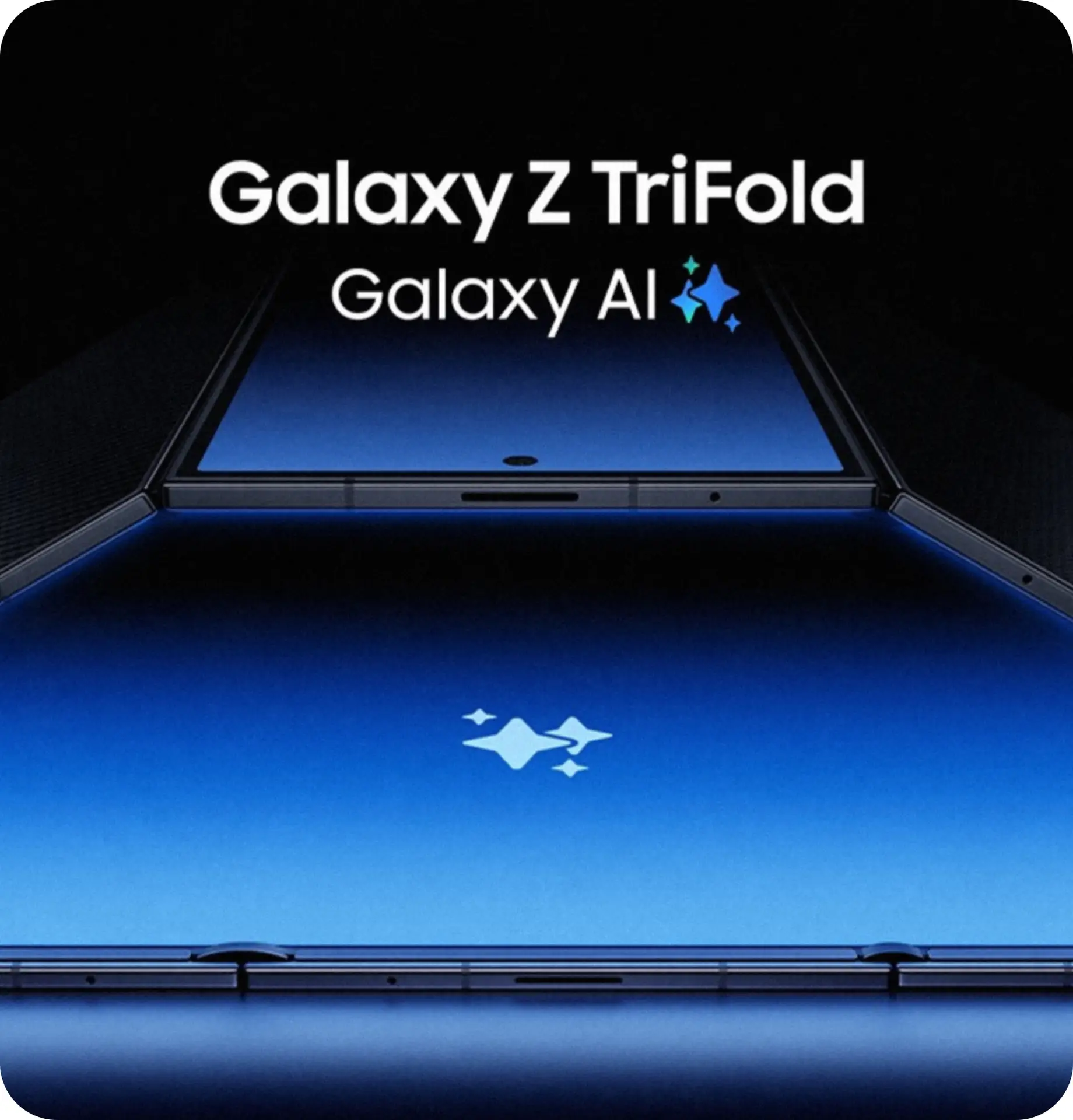
Samsung Galaxy Z Tri-Fold: The Future of Foldables Is Finally Here
After years of patents, rumors, and concept teasers, Samsung is edging closer than ever to launching its most ambitious device yet — the Galaxy Z Tri-Fold, a smartphone that unfolds into a true tablet-sized display.
Unlike the classic Z Fold lineup, which folds like a book, the Tri-Fold uses a multi-segment display that allows the device to expand into an almost laptop-sized screen. This design could transform the foldable market and introduce a completely new category of portable computing.
A New Era of Folding Phones
Samsung’s Tri-Fold is expected to introduce:
- A dual-hinge trifold structure
- An improved flexible AMOLED display
- Better durability than early foldable devices
- Seamless switching between phone, mini-tablet, and full-tablet modes
The ability to carry three form factors in one device makes the Tri-Fold one of Samsung’s boldest experiments yet.
How the Tri-Fold Works
From leaked patents and supply-chain reports, the Tri-Fold is expected to feature:
- Two hinges that fold inward and outward
- A primary display that expands into a large, uninterrupted panel
- Adaptive software that automatically rearranges apps
- A reinforced frame to improve long-term durability
Samsung has reportedly been working on hinge technology that eliminates the deep crease found on earlier foldables. If successful, this alone would be a major leap forward.
Why Samsung Is Betting Big on Tri-Fold Technology
As competition in folding phones grows, Samsung is looking for the “next big category shift.” According to supply-chain analyst Ross Young, Samsung has already begun mass-component orders, signaling the company is preparing for a public reveal.
But here’s the real reason this device matters:
Incremental upgrades in foldables are slowing down — most devices now offer:
- Similar cameras
- Similar battery sizes
- Similar multi-tasking features
Samsung needs something completely new to stay ahead. A Tri-Fold device gives them a fresh category to dominate before Apple or Google attempts a similar design.
Our Take: What Makes the Tri-Fold Actually Exciting
While foldables today are impressive, they still struggle to justify their higher prices. The Tri-Fold, however, has the potential to solve real-world problems:
1. True multitasking
Not just split-screen — but three-way layouts that replicate a mini-laptop.
2. A tablet that fits in your pocket
People want tablet productivity without carrying a tablet.
3. Actual work capability
Writers, designers, coders, and students could use the expanded screen to work anywhere.
This is the first foldable that feels like it could replace two devices at once: a phone and a tablet.
How It Could Compare to Other Foldables
| Feature | Tri-Fold | Z Fold 5 | Pixel Fold |
|---|---|---|---|
| Screen Expansion | Triple-panel | Single fold | Single fold |
| Use Case | Phone → Tablet → Workstation | Phone → Tablet | Phone → Tablet |
| Productivity | Highest | Medium | Medium |
| Novelty Factor | Very high | Moderate | Low |
| Expected Price | $$$$ | $$$ | $$$ |
Samsung is clearly pushing toward a new tier of device — not just improving the old one.
Software That Makes It Real
Hardware is only half the story. Samsung is reportedly working with Google to refine Android’s multi-display UI, allowing apps to adapt intelligently across three display zones.
Expected software improvements include:
- Advanced S-Pen compatibility
- Desktop-like multi-window support
- Auto-resizing for browsing, editing, or streaming
- Optimized gesture controls
If Samsung gets the software right, this could redefine mobile productivity.
When Will It Launch?
Rumors suggest Samsung could reveal the Galaxy Z Tri-Fold during its 2025 Unpacked event, potentially alongside the upcoming Galaxy Z Fold 7 and Flip 7.
While no official date has been announced, production indicators suggest Samsung is preparing early units for mass testing — usually the last phase before a public launch.
Why This Device Matters
The Tri-Fold isn’t just another foldable — it’s a glimpse into the future of mobile computing.
If the display proves durable, and the hinges last beyond 200,000 folds, it could become the device that finally merges:
- A smartphone
- A tablet
- A portable workstation
Into one device.
More importantly, it sets Samsung apart during a time when smartphone innovation feels predictable. This is the kind of risk that pushes the industry forward.
Stay Ahead
As the Galaxy Z Tri-Fold moves closer to launch, its success will depend on price, durability, and whether Samsung can deliver a truly seamless software experience. One thing is clear: devices like this represent the next generation of mobile technology — and Samsung wants to be the first to define it.
Stay ahead.
About the Author