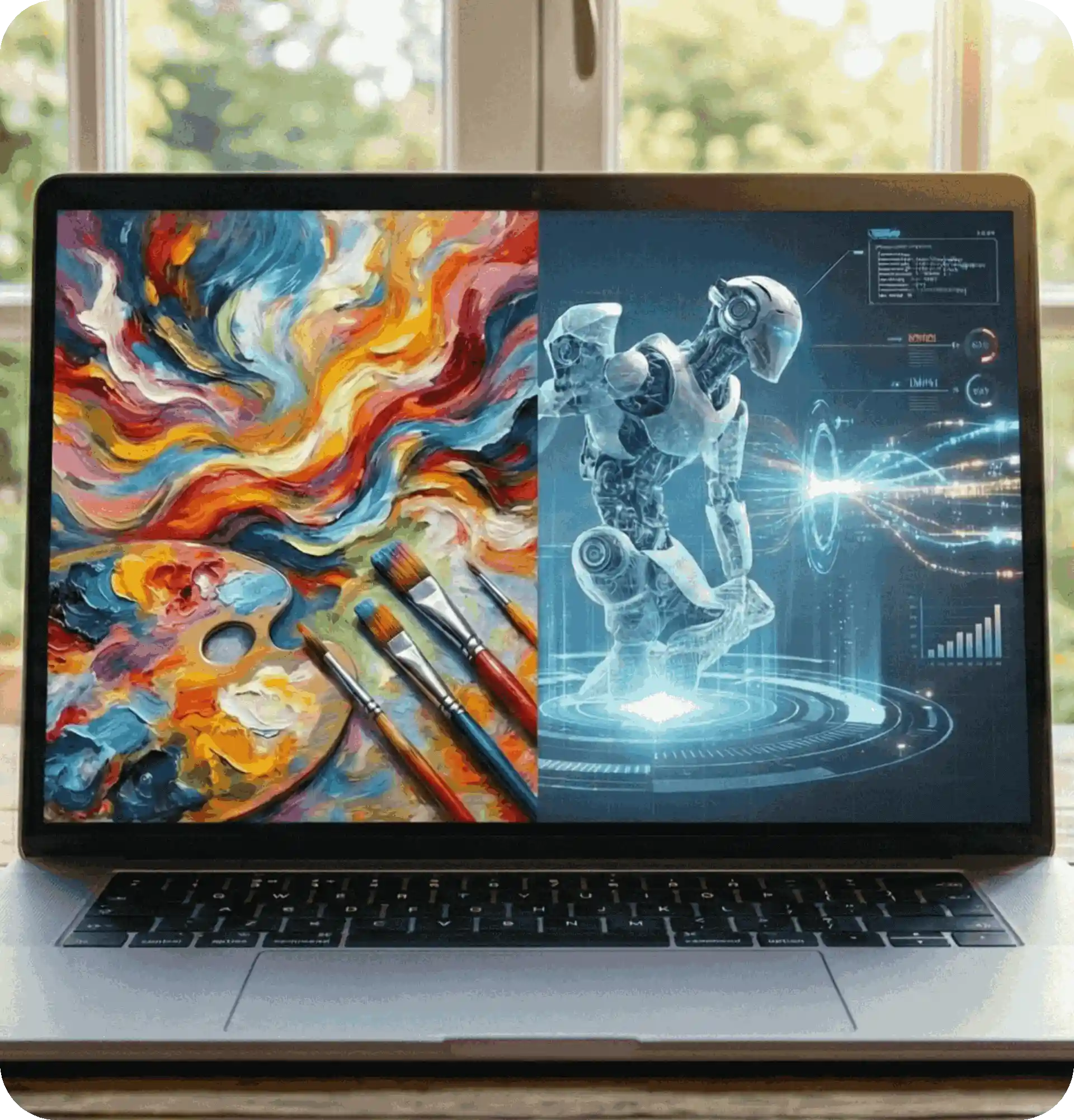
AI design tools have advanced at an unbelievable pace — from SeeDream 4’s hyper-detailed art generation to Nano Banana’s fast concept creation and ChatGPT’s ability to streamline entire workflows. With results that once required hours now completed in seconds, many designers are asking the same question: Will AI eventually replace human graphic designers?
Here’s a clear, grounded breakdown of what’s actually happening — and where the future is heading.
What Is This?
This article explores whether AI is on track to replace traditional designers, or whether the future looks more like a hybrid between human creativity and AI-powered assistance. We review the capabilities of modern AI tools and compare them with the fundamentals of classic design.
What’s New (Nana Banana, SeeDream 4, ChatGPT in Design)
Nana Banana
A rising AI-powered design tool known for:
- Ultra-fast concept generation
- Stylized branding visuals
- Iteration speed that supports creative brainstorming
Its strength is speed — it helps designers explore many directions quickly.
SeeDream 4
One of the most advanced AI image-generation engines:
- High realism and detail
- Strong understanding of art styles
- Ability to create production-level concept art
It’s popular among creative studios because it dramatically reduces early-stage exploration time.
ChatGPT
While not an image generator, ChatGPT plays a major role in:
- Creating design briefs
- Structuring brand guidelines
- Explaining color theory, composition, and typography
- Producing feedback on drafts
- Automating parts of the design process
AI isn’t only about generating visuals — it also accelerates creative thinking and planning.
How It Works
AI models learn from massive datasets of art, photography, and design.
When prompted, they recombine patterns, styles, and structures to generate new outputs that look human-made, but they’re essentially algorithmic predictions.
This is powerful — but it’s not the same as original human judgment, intention, or emotional design decisions.
Background
The fear that “AI will replace designers” isn’t new. Similar debates happened during:
- The rise of Photoshop
- Canva’s introduction
- The shift from hand drawing to digital art
- Template-based design tools
Every time, the field changed — but designers didn’t disappear. Instead, their tools evolved, and new specialties were created.
AI is simply the next evolutionary step.
Comparison: AI Tools vs Traditional Graphic Design
| Aspect | AI Tools (Nano Banana, SeeDream 4) | Human Designers |
|---|---|---|
| Speed | Extremely fast | Slower but intentional |
| Originality | Pattern-based | Truly original thinking |
| Context understanding | Limited | Deep, project-wide understanding |
| Emotional decisions | None | Central to design |
| Brand strategy | Weak | Core human expertise |
| Iteration | Instant | Deliberate & meaningful |
AI enhances execution, but design thinking remains human.
Pros & Cons of AI in Design
Pros
- Rapid ideation
- Lower cost for early-stage explorations
- Helps non-designers create simple visuals
- Supports designers in repetitive tasks
- Great for moodboards, drafts, and variations
Cons
- Can’t replace deep brand strategy
- Weak understanding of cultural nuance
- Risk of producing derivative or repetitive work
- Ethical concerns around training data
AI excels at creation, not communication — and design is communication.
What We Still Want to See
- More transparent training datasets
- Tools that focus on design reasoning, not just visuals
- Better respect for artistic styles and copyrights
- Hybrid workflows that clarify where AI stops and the designer begins
The future of design needs tools that support creativity — not models that override it.
Our Take: Why This Matters
AI will not replace graphic designers — it will replace designers who refuse to use AI.
Modern creative work is shifting toward a model where:
- AI handles fast execution
- Humans handle strategy, emotion, storytelling, and brand identity
Tools like Nano Banana and SeeDream 4 are incredible accelerators, but they don’t understand a brand’s values, user needs, or the purpose behind a campaign.
Designers who master both traditional fundamentals and AI collaboration will be the ones who lead the industry.
This isn’t a replacement — it’s a redistribution of effort.
Conclusion
AI is reshaping the design world, but it isn’t eliminating the role of the designer. Instead, it’s giving them new superpowers. Whether AI becomes a standard tool or a complete creative partner, one thing is clear:
the designers who thrive will be those who combine human vision with AI speed.
Stay Ahead
For more updates, insights, and breakdowns across tech, entertainment, and new trends, keep following TopicTric — we cover every major shift the moment it happens so you never fall behind.
About the Author