Recently, a few private companies have begun developing technologies to deliberately reflect sunlight away from Earth — essentially “blocking” or “shading” the sun to cool the planet. These efforts, while still early and experimental, have sparked global debate because of the potential for massive climate impact — and major risks.
Here’s what’s happening, what’s at stake, and what to watch out for.
What’s Going On: Solar Geoengineering Moves Forward
- Some companies (e.g. Stardust and Make Sunsets) are raising money to develop technologies aimed at reflecting sunlight away from Earth. This takes the form of stratospheric particles or aerosols, or other optical-reflection methods — effectively creating a “sun-shade.”
- These are private initiatives — not government drives. The firms claim they might offer a fast-track way to lower global temperatures amid rising greenhouse gas emissions.
- For the first time we’re seeing real money flow into sun-shield concepts outside of academic or government programs. That means this is not purely theoretical anymore.
Why This Matters: Climate Urgency + New Paths
1. The climate crisis is accelerating
Global warming continues to intensify. Traditional paths — emissions cuts, renewables rollout — might take decades to show major effect. Sun-shade tech promises immediate cooling. For some, that’s urgent, necessary — a “global air-conditioner.”
2. Huge potential leverage — and risks
If it works, such tech could buy the world time — reduce heat waves, lower sea-level rise pressure, give countries breathing room to transition energy systems. But: it’s unproven on large scale. Mistakes could trigger climate instability, uneven regional effects, or unintended environmental harm.
3. The shift from public to private — faster innovation, less oversight
Because private firms are leading this push, development could move faster than slow government-led research. That might accelerate breakthroughs — but also circumvent public oversight, regulation or global governance.
What’s Changing: From Research to Real-World Deployment
According to early data and filings:
- Startups are testing stratospheric aerosol deployment via balloon or lightweight probes.
- Some claim they will offer “cooling credits” — a possible future carbon-offset style market tied to sun-shade deployment.
- If widely deployed, this could become a large sub-industry — combining climate intervention, finance, and environmental engineering.
This marks a shift from wait-and-see climate research to active pursuit of geo-engineering as a product/service.
Our Take: Terrible Necessity or Dangerous Gamble?
This development is a true double-edged sword.
Why It Could Be Important
- Climate change is already destabilizing ecosystems, weather, agriculture, and economies. A successful sun-shade technique — if safe and reversible — could buy time for emission reduction, adaptation, and clean energy transitions.
- For regions severely threatened by heat, drought, or sea-level rise, this may offer tangible protection while broader solutions mature.
- Private-sector involvement might accelerate innovation, testing, and deployment — far faster than slow-moving governments.
But the Risks Could Be Huge
- The global climate is a tightly-coupled system: changing solar input globally or regionally could disrupt rainfall, wind patterns, monsoons, or crop yields.
- Who controls the switch? A few companies or governments controlling aerosol deployment globally could create political and ethical tensions.
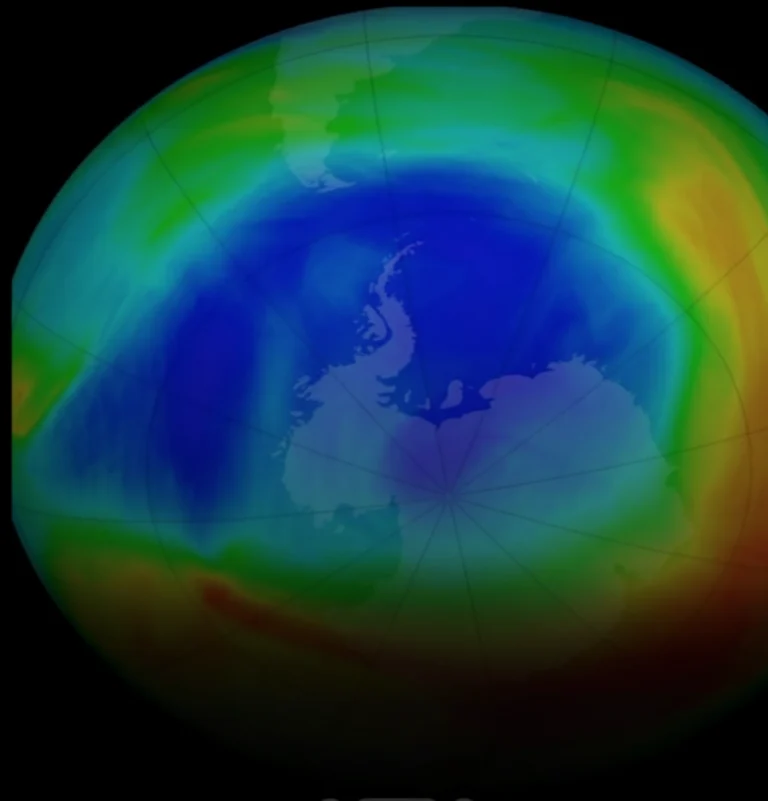
- Side effects may be unpredictable and long-term: ozone layer damage, ecological consequences, governance issues, inequality between regions benefiting vs suffering side-effects.
Pros & Cons — Should We Support Sun-Shade Tech?
Pros:
- Offers a rapid-response tool against climate warming
- Could complement—not replace—renewables and emissions cuts
- Private funding may speed up R&D and innovation
- Potential to reduce heat waves, extreme weather, global temperature spikes
Cons:
- Great scientific uncertainty and risk of unintended consequences
- Ethical/governance concerns: who decides when/where to deploy?
- Could reduce urgency for cutting emissions — a “moral hazard”
- Potential environmental harm, instability in ecosystems and weather
What to Watch: Key Questions Before We Shade the Sky
- Global regulation & oversight: who governs deployment? What if some countries deploy and others don’t?
- Long-term effects: scientists need decades — not weeks — to study impact on climate, ecology, biodiversity.
- Transparency & public consent: major geoengineering decisions must involve global consent, not just private investment.
- Balance with renewables & emissions cuts: sun-shade should never replace reduction of greenhouse emissions.
⚠️ Disclaimer: This article is for informational and educational purposes only. It does not represent support or endorsement of geoengineering. The ideas discussed are speculative and based on early-stage research.
Stay Ahead
As climate, technology, and global politics evolve — every major shift matters. For transparent breakdowns, real analysis, and up-to-the-minute coverage on climate, energy, and world affairs — keep following TopicTric.
About the Author